Paint & colour
Wallpaper or Paint? Choosing for Your Feature Wall
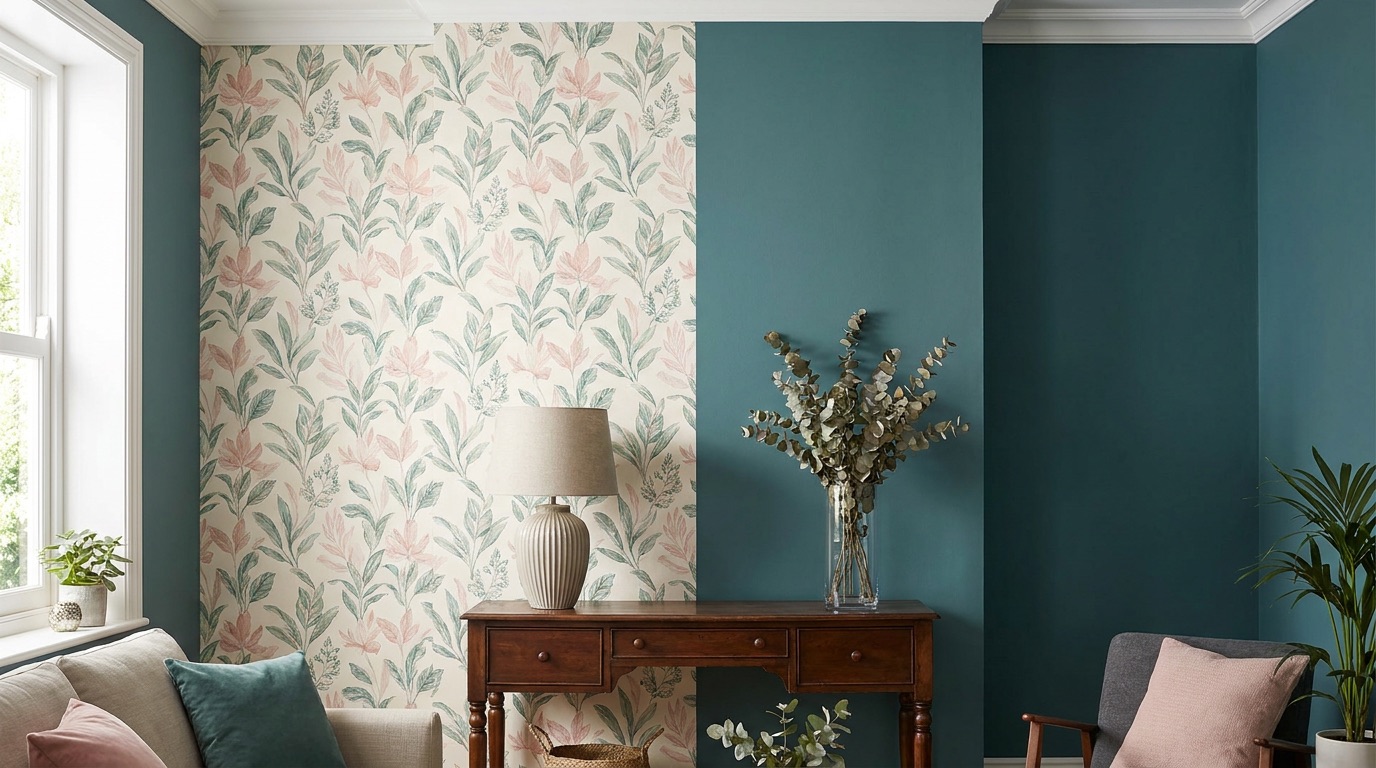
A feature wall is the cheapest way to change how a room feels. It's also the easiest thing to get slightly wrong — usually by choosing the wrong wall rather than the wrong colour.
Pick the wall first, the finish second
The wall should be one the room already points at. In most British living rooms that's the chimney breast; in a bedroom it's the wall behind the headboard. Walls with doors in them, or broken up by radiators and sockets, rarely work — the effect gets chopped into pieces.
One more test: stand in the doorway. The wall you naturally look at is the one worth treating.
The case for paint
- Cheaper, usually substantially — a tin of paint against several rolls of paper plus hanging time.
- Easy to change your mind. Bored in two years? Paint over it in a day.
- Any colour you like, mixed to order.
- Forgiving on imperfect walls, particularly in matt.
Paint suits rooms where something else is already doing the decorative work — a patterned rug, bold artwork, a busy bookshelf. A deep, saturated colour behind a plain sofa does an enormous amount with very little.
The case for wallpaper
- Pattern and texture that paint simply can't reproduce.
- Depth — a good paper reads as considered rather than decorated.
- It can hide a multitude of sins. Heavier papers disguise uneven walls that paint would expose.
- It becomes the room's personality, which is exactly what you want in a small space you've decided to make dramatic rather than fight.
Paper earns its place in rooms that are otherwise plain, and in small rooms where going bold beats trying to make the space feel bigger — downstairs loos and box rooms are perfect candidates.
The practical differences
Cost
Paint wins on materials every time. Wallpaper costs more per roll and takes longer to hang, and a large pattern repeat means more waste — you can lose a surprising amount of each roll matching the pattern.
Preparation
Both need sound walls. Paper often needs the wall lining first, and if you're stripping existing paper, the plaster underneath may need making good before anything new goes on. That's the step people forget when comparing prices.
Living with it
Paint can be touched up invisibly if you keep the tin. Wallpaper can't really — a scuffed or torn section usually means re-papering the wall, so buy an extra roll from the same batch and keep it in the loft.
Common mistakes
- Choosing the wall with the door in it. The pattern or colour gets interrupted and the effect is lost.
- Matching the paper too literally. Pulling a colour from the paper for the other walls looks better than matching it exactly.
- Ignoring the light. A north-facing wall will read cooler and darker than the sample in the shop. Always look at it in the actual room, at different times of day.
- Forgetting the woodwork. Skirting and architrave in tired old white next to a beautiful new feature wall will undo most of the effect.
- Cheap paper on bad walls. Thin paper telegraphs every lump underneath and the seams are unforgiving.
Still torn?
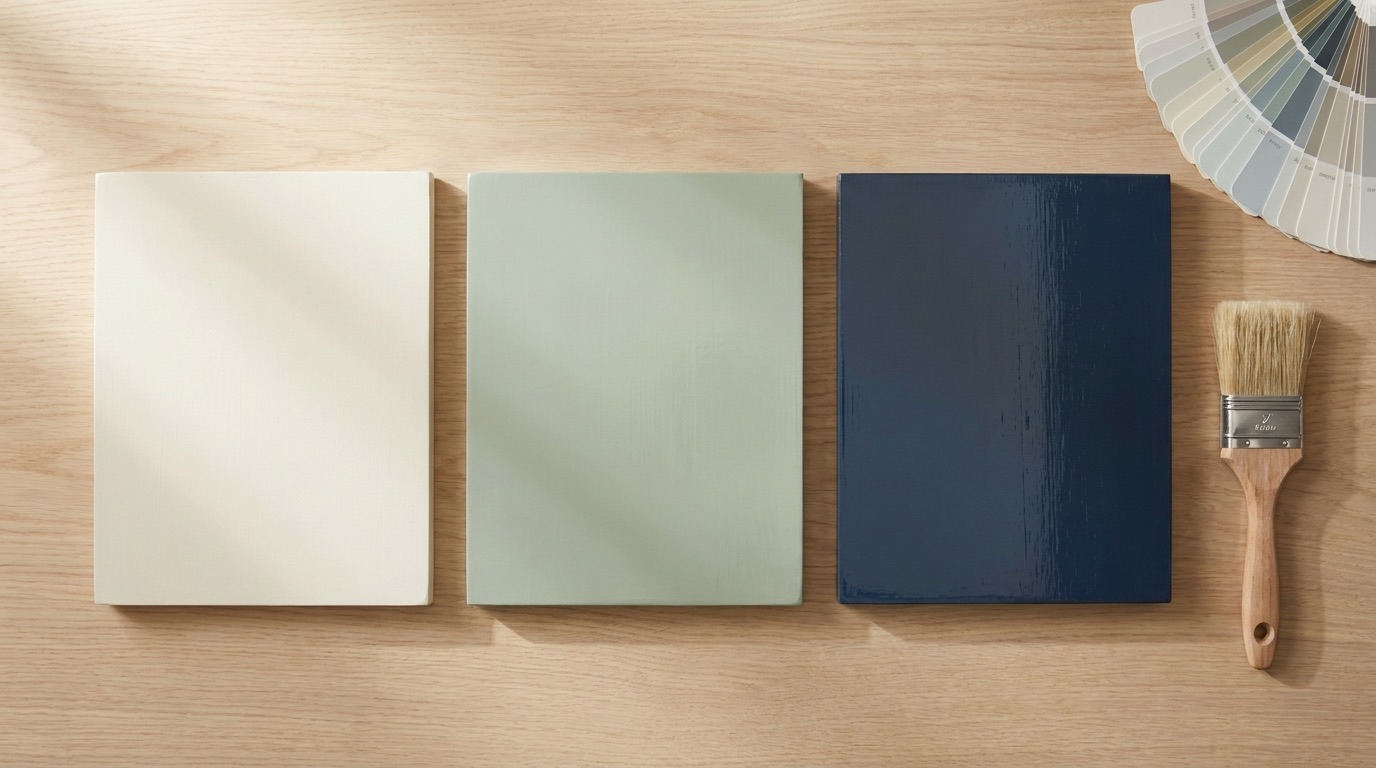
Order samples of both, tape them to the wall, and leave them there for a week. Look at them in the morning, in the evening with the lights on, and on a grey day. Whichever one you stop noticing is the one that's wrong.
Della hangs and strips wallpaper as well as painting, across Preston, Leyland, Chorley and South Ribble — so if you want a second opinion before committing, ask for a free quote and talk it through.