Paint & colour
Emulsion, Eggshell or Satin? Choosing the Right Paint Finish
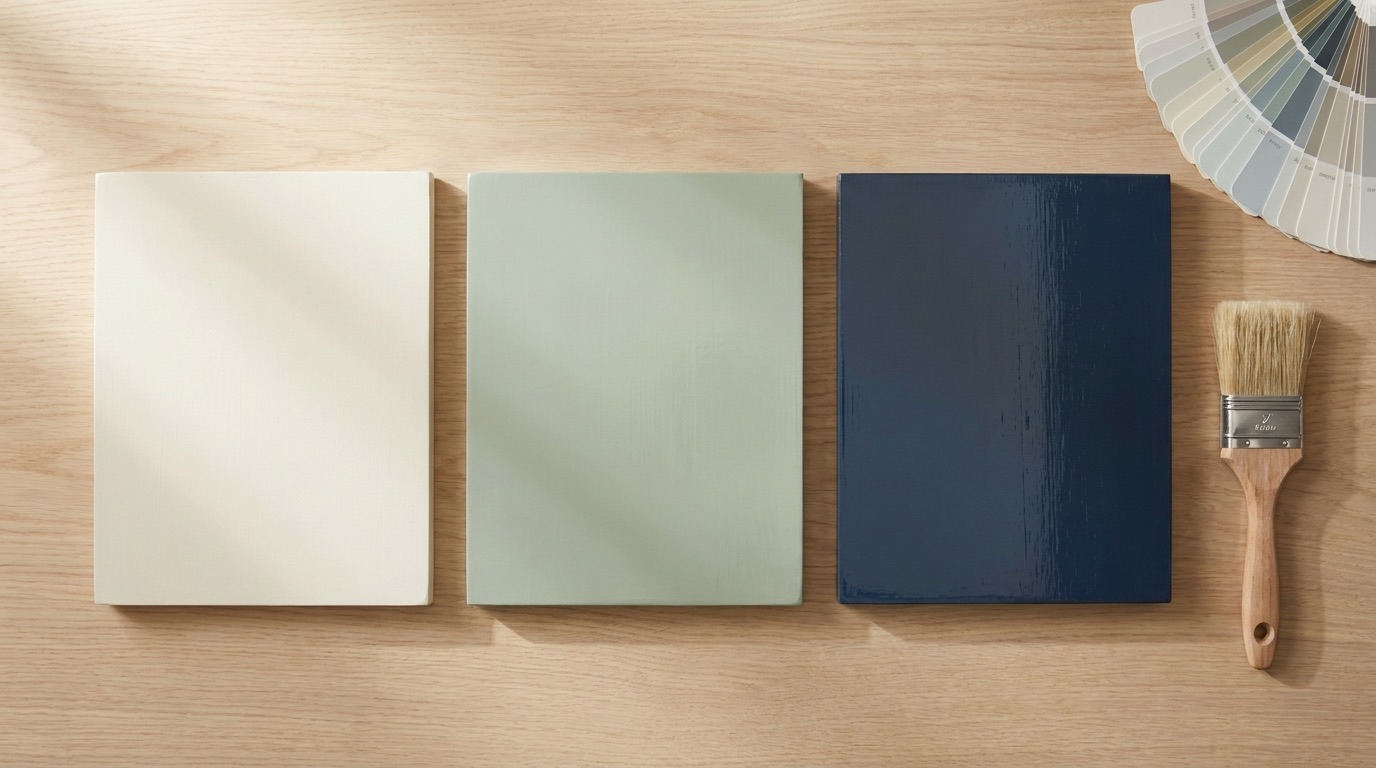
Most people choose a colour carefully and then pick the finish almost at random. It's the wrong way round — the finish decides how the colour actually looks on your wall, how well it survives being cleaned, and how much of your plaster's imperfection it puts on display.
Here's the plain-English version.
The sheen scale
Every paint sits somewhere on a scale from completely flat to mirror-shiny. The shinier it is, the tougher and more wipeable it is — and the more it reflects light, which means the more it reveals every bump, ripple and filled patch underneath.
Matt emulsion
Best for: walls and ceilings in living rooms, bedrooms and dining rooms.
Flat, soft and forgiving. Because it barely reflects light it hides uneven plaster better than anything else, which matters in older houses. The trade-off is durability — standard matt marks easily and doesn't love being scrubbed.
Washable / durable matt
Best for: hallways, stairs, kids' rooms, anywhere that gets touched.
Keeps the flat look but with far better resistance to scuffs and cleaning. Usually worth the extra few pounds a tin in any high-traffic space. If you have children or a dog, this is the one.
Silk / soft sheen emulsion
Best for: kitchens and bathrooms, if you like the look.
Noticeably reflective and easy to wipe. Be warned: on anything other than very flat plaster, silk will highlight every imperfection. In an older property it's often a poor choice for that reason alone.
Eggshell
Best for: woodwork — skirting, architrave, doors — and sometimes walls.
A low, subtle sheen. It's become the default for woodwork in most modern British homes because it looks contemporary and understated next to a matt wall, while still being properly durable. There are both water-based and oil-based versions; water-based stays whiter over time and smells far less.
Satin
Best for: woodwork where you want a bit more shine and durability.
A step glossier than eggshell. Hard-wearing and easy to clean, which makes it popular on skirting boards that take a beating from the hoover.
Gloss
Best for: traditional woodwork, radiators, exterior joinery.
The toughest and shiniest. It's fallen out of fashion indoors, but on a period property with detailed mouldings it can look absolutely right. Oil-based gloss will yellow over time, especially somewhere that gets little natural light — water-based versions hold their colour much better.
The rules worth remembering
- Bad plaster? Go flatter. Matt hides sins. Silk announces them.
- Gets touched? Go tougher. Hallways, stairs and kitchens need washable finishes.
- Steam needs the right paint. Bathrooms and kitchens benefit from moisture-resistant formulations, not just any wipeable paint.
- Same colour, different finish, different result. A colour in matt looks softer and deeper than the identical colour in satin.
- Test on the actual wall. Not on a chart, and not in one spot — try it near the window and in the darkest corner, and look at it at night under your own lights.
Getting it wrong is expensive
The finish is much harder to change your mind about than the colour. Repainting a wall is a day. Stripping silk back off badly-prepared plaster, making it good and starting again is considerably more than that.
If you're unsure, ask. Della gives free quotes across Preston, Leyland, Chorley and South Ribble and is happy to advise on finishes for your particular walls — including talking you out of something that won't work in your room.