Paint & colour
The Best Paint Colours for Small Rooms and Dark Hallways
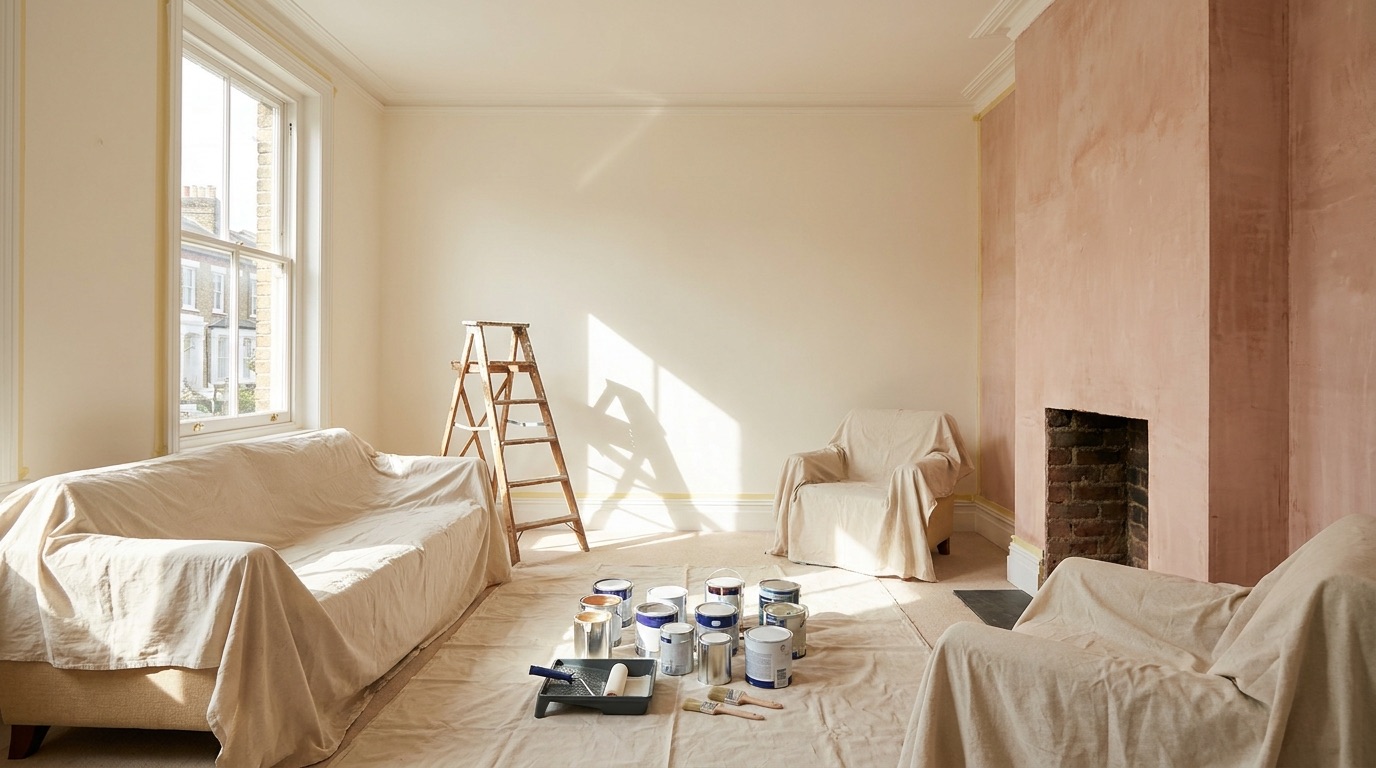
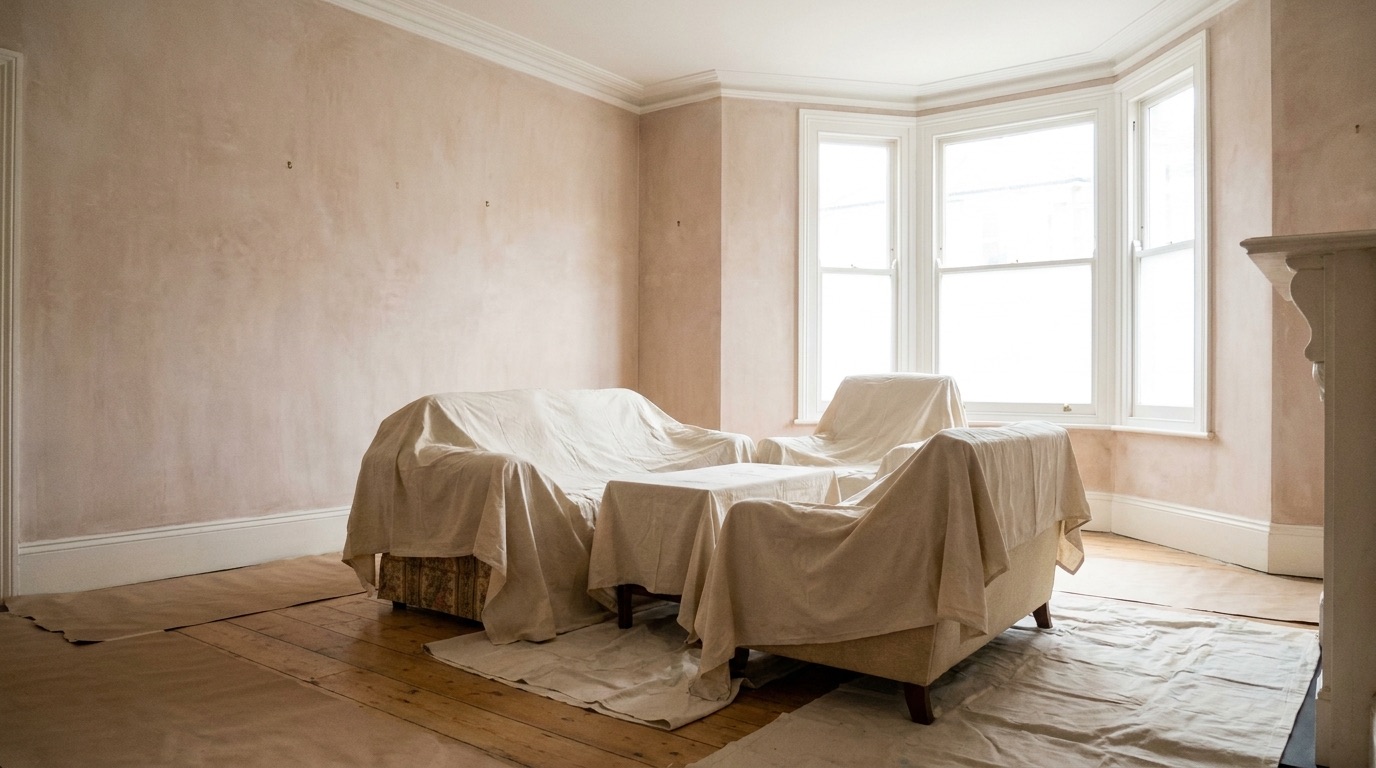
The standard advice is to paint a small room brilliant white to make it feel bigger. It's the most repeated decorating tip there is, and in a lot of British houses it's simply wrong.
Why brilliant white often backfires
Brilliant white is a cool, slightly blue-toned colour. In a bright, south-facing room it looks crisp. In a narrow hallway with one small window, or a north-facing box room, it has nothing warm to reflect — so instead of looking bright it looks grey, flat and faintly cold. It also throws every corner into sharp relief, which emphasises exactly how small the room is.
The goal isn't maximum brightness. It's softening the boundaries so your eye doesn't stop at them.
What works instead
Warm off-whites and soft neutrals
Whites with a hint of yellow, red or a touch of grey warmth do the job brilliant white is supposed to do. They bounce light without going cold, and they feel welcoming rather than clinical. For most small rooms and hallways in older Lancashire housing stock, this is the safe and genuinely effective choice.
Paint the woodwork close to the walls
This is the single most effective trick for a small room. Strong contrast between white skirting and a coloured wall draws a hard line round the edges of the space and makes it read as smaller. Painting skirting, architrave and even the doors in the same colour as the walls — or a shade very close to it — makes the boundaries disappear and the room feel considerably more generous.
Take the colour over the ceiling
Counter-intuitive, but in a small room a ceiling in the same soft tone as the walls stops the eye registering where the wall ends. A brilliant white ceiling above a coloured wall does the opposite.
Or go the other way entirely
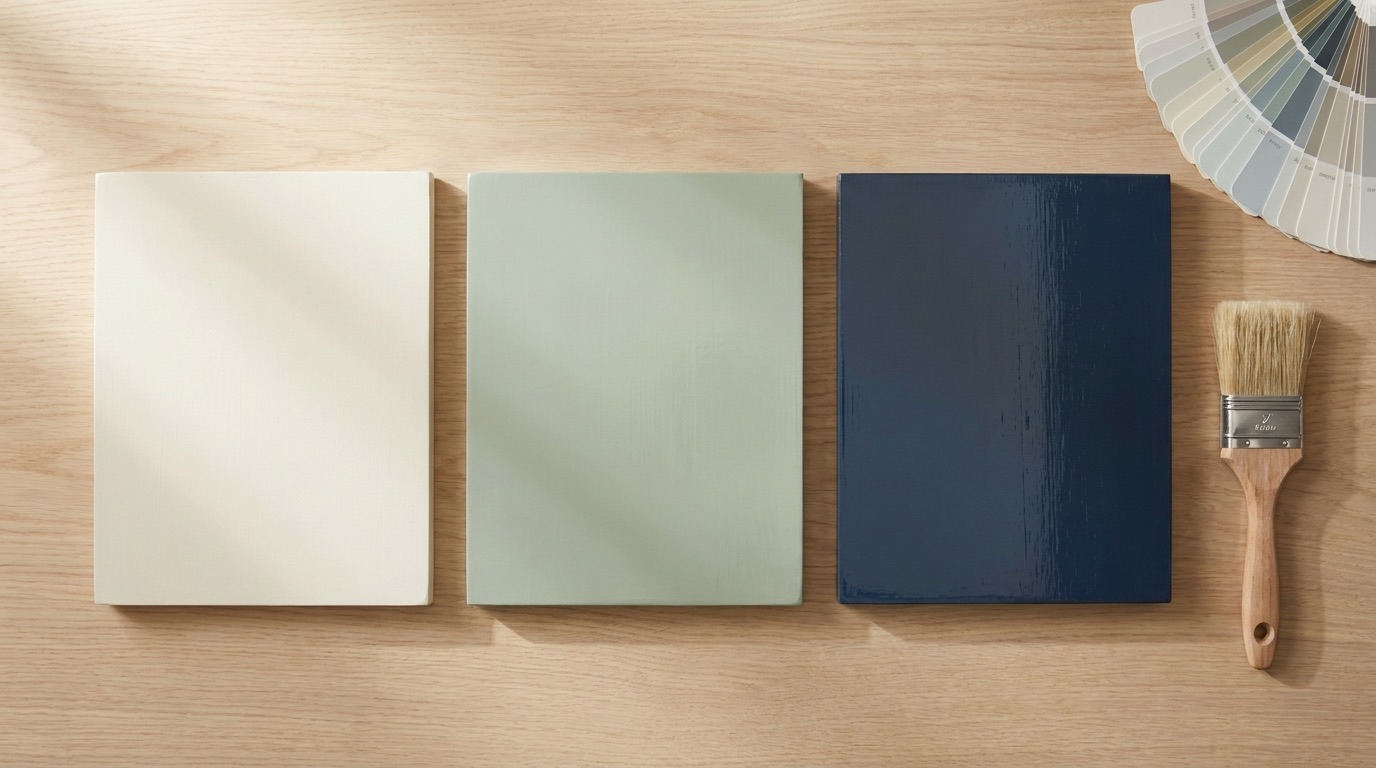
Small rooms with very little natural light — downstairs loos, box rooms, windowless hallways — often work beautifully painted deep and dark. Ink blue, forest green, deep clay. You stop pretending the room is bright and make it feel intentional and enveloping instead. It's a bolder choice, but in a room that was never going to feel airy it usually looks far better than a failed attempt at light.
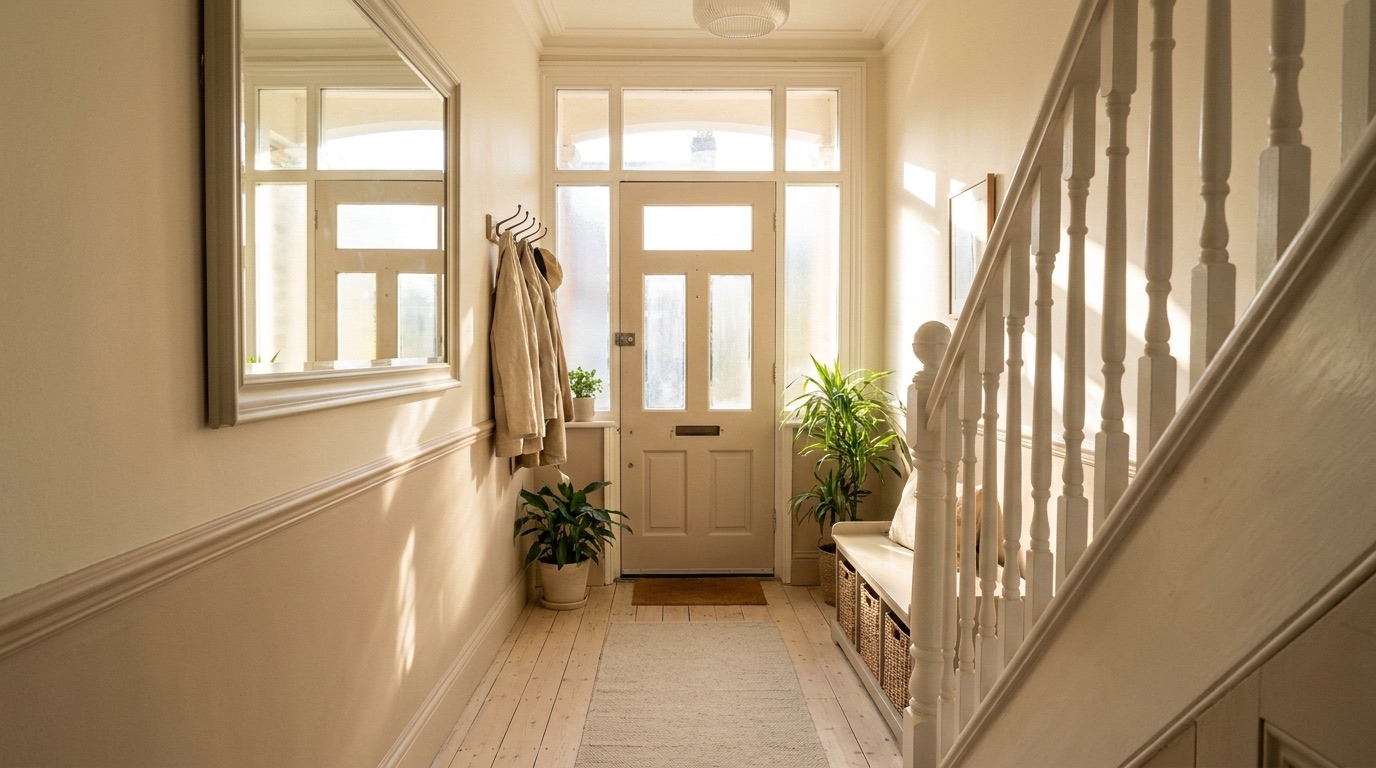
Specifically for hallways
Hallways have a particular problem: they're often long, narrow, have no windows of their own, and every door off them is shut most of the time.
- Use a warm, light tone on the walls, and carry it up the stairs so the space reads as one.
- Keep the doors light. A row of dark doors down a narrow hall closes it in.
- Mirrors genuinely help, particularly opposite whatever light source exists.
- Consider a dado. A slightly deeper tone below and lighter above adds interest and hides scuffs at bag-and-shoe height.
- Use a durable finish. Hallways take more knocks than any other room — washable matt, not standard matt.
Test properly
Paint a large patch — A3 at minimum, ideally a metre square — and look at it in the actual room. Colours shift dramatically with light: a warm grey can turn lilac in north-facing light, and a soft white can turn distinctly yellow under warm bulbs at night. Check it morning, afternoon and evening before committing.
Better still, paint your sample on a piece of lining paper and move it around the room rather than painting straight onto the wall — you'll see how the same colour behaves near the window and in the darkest corner.
Getting a second opinion
Colour advice is part of the job, not an extra. Della works in homes across Preston, Leyland, Chorley and South Ribble every week and has seen what does and doesn't work in these houses. If you'd like a hand choosing — or just an honest opinion on a colour you're not sure about — ask for a free quote.